

Why You Need to Get Your Downpipe Repairs Near Me
It is important to contact the experts if your pipes are leaking. The same applies to your downpipes and gutters.
These essential elements are vital in directing water away from the roof of your house & into stormwater drains. Your property could be subject to serious damage without them. Here are some signs your downpipes need to be repaired.
Clogs
Clogged pipes can be a pain but they're not difficult to unblock. To get rid of a pipe you can use an auger for toilets or any other professional drain cleaning equipment. Get a plumber on the line if you are unable to reach the blockage.
A clog occurs when a blockage is found beneath the surface of the pipe. This can be caused by tree roots or by a blockage in the line. It could be a sign there is a leak in the pipe. If you suspect that your downpipe is clogged then try covering the drain and run water through it to see if it gets cleared.
If the downpipe is made of plastic, you can fix it by applying an impervious sealant to the joints. Be sure to choose an appropriate sealant with the material of your downpipe. For example, a rubber sealant won't work on steel downpipes.
For older downpipes, it is possible to apply a rust inhibitor to prevent the clog from returning. This is especially crucial for those who reside in an area that receives frequent rainfall. In addition to preventing a clog it also increases the life of your downpipe.
You can also use the garden hose to clean out the drainpipe. Cover the drain, switch on the hose and then direct it towards the downpipe to eliminate any debris. If the issue persists it is possible to dig up the affected section of the downpipe and then replace it.
A blockage in the drain may cause a clog to form in the downpipe. It can also be a sign of serious damage to your waste lines that requires professional repair services.
Traditionally, clogs were used as footwear for protection in agriculture and certain factories and mines. Clogs are frequently associated with the 1960s counterculture's back-to nature attitude. Certain kinds, such as the Swedish traskor and Japanese geta, are fashionable today. Clogs are especially popular with nurses, who appreciate the comfort and durability of this type of shoe. They're also a good choice for women who are on their feet all day because they offer support and cushioning.
Leaks
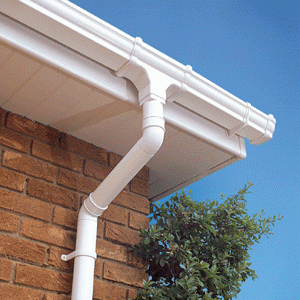
Downpipes are designed to divert rainwater away from walls and foundations into a drain. However, they can be damaged by blockages or leaks. It's important to repair your downpipes when they are damaged to avoid water damage. The most frequent causes of downpipe damage are blockages, leaks, and corrosion.
RepairMyWindowsAndDoors can cause problems due to weather conditions, wear and tear, or aging. The downpipes and guttering are exposed to all sorts of weather, from hot sun to snow and frost. Over time, this can cause joints to loosen and break. This can then drag dirt into the joint seals, which could cause leaks.
Roof and gutter repair tape can be used to fix most leaks. Clean the area with a metal brush to remove any paint or corrosion. Cut the length to be only a few centimetres wider than the width of your downpipe. Remove the backing from the paper and wrap the tape around the joint, overlapping the edges and pressing the edges. You could also use metal guttering sealant for larger leaks and damaged union pieces, but be sure to wear gloves when handling the sealant.
If you're working on the ladder, ask a friend or family member to assist you. Always check the weather before you begin, and if working at height, make sure you're on an appropriate ladder with an appropriate hold and ask someone else to help you maintain away from the roof's edge.
The best method to avoid leaks from your downpipe is to stop them from developing in the beginning. Regularly cleaning your gutters and downpipes will stop obstructions from forming and ensure that any leaks are promptly repaired. You should also examine your downpipes on a regular basis for signs of wear and tear, particularly in the case of an area with a lot of wind. Fixing problems with your downpipes early can prevent any further problems with your exhaust system and helps keep your system running at its best.
Corrosion
Corrosion is the gradual degrading of metals, in particular due to chemical interactions with their environment. This process can affect everything from bridges and pipelines to cars, homes, and plumbing systems. Corrosion can lead to walls to thin, leaks and even rupture of pipes that transport water through our homes and structures. This kind of damage is more common in coastal regions where the climate and surrounding environment accelerates the process of corrosion.
All metals corrode, but the rate at which they do so is contingent on their environment. While certain metals, such as silver and gold, can be naturally found in their purest form but the majority of the metals used by humans to make products, including iron, are made using ores or minerals that are unstable in their natural state. The process of corrosion is also caused by moisture, which gives the electrochemical energy required to oxidize.
The consequences of corrosion are costly and sweeping, unlike weather-related disasters which can be avoided in large part by proactive mitigation measures. Corrosion costs the economy over 2.5 trillion dollars in direct losses each year. This includes a range of damages, including loss of personal and property safety, environmental harm, and economic loss from reduced efficiency.
Corrosion can be prevented by using protective coatings and linings that protect the metal from the elements that cause corrosion. These barriers can prolong the life of pipes. Regular inspections are also essential, as early detection can prevent major damage from occurring. Inspections using visuals, ultrasonics and water analysis are able to identify early rust formation. This allows for quick interventions.
If your downpipe has a small leak or rust, clean the area around it. Then, cut a piece of repair tape that is a few centimetres more than the width of your downpipe. Take off the backing paper and wrap it around the joint, covering the ends. Press firmly using your hands to mold the tape into position and ensure it is secured. This will protect the joint from further leaks and corrosion.
Damage
The first protection for your roof is the downpipes and gutters. They are crucial as they help to channel excess rainwater from your foundations and walls. Water can get into your home and cause damage, mould, and mildew when they're damaged.
It is essential to have your downpipes inspected frequently and, if required repaired. This will ensure that your downpipe functions efficiently and effectively in order to protect your home or business from the elements.
Guttering and downpipes are often located in the outdoors. This means they are exposed to harsh conditions in the weather, as as other environmental factors which can cause them to deteriorate with time. This is why regular cleaning is so important not only to keep the pipes clear but also allows to identify any issues early, before they grow into more serious problems.
The main issue that causes downpipes to require repair or replacement is damage. Damage can be caused by a variety of things, including heavy snowfalls and the hefty accumulation of debris, ladders that lean against them, or even ball games for children. These issues can cause cracks or splits, which will cause water to uncontrollably leak out. This makes your home vulnerable to water damage, mould and mildew.
Damage can also be caused by elements' corrosive effects that, over time, can cause your downpipe to start to rust and disintegrate. This can lead to leaks and may require repair of your downpipe near me.
If your downpipe is leaking or cracked, a fast and easy way to fix it yourself is by using gutter repair tape. This can be found in the majority of hardware stores and comes in a range of sizes to suit your needs. Cut a length of repair tape that is a few cm longer than the downpipe. Remove the paper backing and press the tape onto the joint or crack. Once the gutter sealant is dry you can repair the wall clips (for metal downpipes) or screw them back in place.